The History of Hip Hop Jewelry

Updated: May 20
If you wear a Cuban link today, you’re wearing more than metal. You’re wearing 50 years of New York sidewalk history.
Most people think "iced out" started with the Migos or Johnny Dang. It didn’t. The roots go back to the Bronx — and understanding them helps explain why certain pieces (like the Cuban link and Jesus piece) never go out of style.
The Bronx Origins: Gold as Identity (1970s)
Early Hip Hop wasn’t about diamonds. It was about visibility.
Rappers like Run–D.M.C. and Kool Moe Dee wore:
Thick gold rope chains
Nameplate pendants (custom name in Old English font)
Large gold rings
This was financial flex + neighborhood pride. Gold meant you made it out. The bigger the rope, the louder the statement.
Fun fact: Most of those early chains were 10K or 14K hollow gold — real gold, but affordable for working-class kids from Queens and Brooklyn.
The Cuban Link Revolution (1980s–1990s)
The Cuban link as we know it didn’t come from Cuba — it was perfected by Miami and NYC Dominican & Puerto Rican jewelers working for the Latin/Hip Hop crossover crowd.
Key moments:
Big Pun & Fat Joe — chunky, polished Cubans became a staple.
LL Cool J & Slick Rick — popularized oversized gold links.
MTV’s Yo! MTV Raps— put the Cuban link in living rooms nationwide.
By the late ‘90s, solid gold Cuban links (usually 14K–18K) were the ultimate status symbol in rap.
The Jesus Piece & Symbolism (1990s)
When Tupac Shakur famously wore a gold Jesus pendant, it cemented a new archetype in Hip Hop jewelry:
Religious iconography
Personal protection / faith
"I came from nothing" energy
Following Pac, Notorious B.I.G. and Nas customized theirs — often with diamonds, rubies, or sapphires flush-set into the gold.
This era birthed the idea of bespoke pendants as autobiography.
The Diamond Era & "Iced Out" (2000s)
Thanks to Jacob Arabo (Jacob the Jeweler) and later Ben Baller, Hip Hop went from goldto diamonds.
Nelly’s "Grillz" (2005) brought dental jewelry mainstream.
Rappers began ordering fully iced out Cuban links, Rolexes, and pinky rings.
Price tags hit $100K–$500K+ for a single chain.
Problem? Most fans could never afford that — which is exactly why Moissanite & silver alternatives started gaining ground later.
Modern Era: Accessible Ice — Moissanite & 925 Silver (2010s–Today)
Today’s generation wants the look without the robbery risk or debt.
Enter:
VVS Moissanite: More fire than diamond, ethically grown, affordable.
925 Sterling Silver bases: Hypoallergenic, tarnish-resistant, heavy feel.
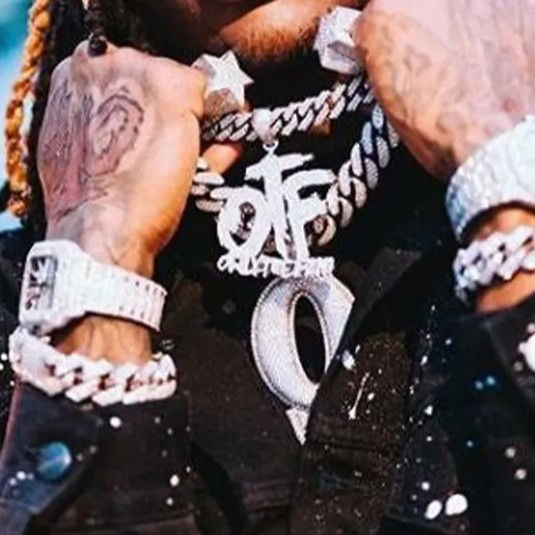
Micro-pave & Iced Out Cuban links: Same visual impact as $20K diamond chains.
Brands like GLEEI exist because the culture evolved:
You don’t need to spend like a label boss to dress like one.
Browse this knowledge and then be an expert: Moissanite vs Diamond: The Real Difference for Hip Hop Jewelry
Why It Still Matters
Hip Hop jewelry isn’t about vanity — it’s about:
Claiming space
Signaling survival
Personal narrative in metal & stone
Whether it’s a $30K diamond Cuban or a GLEEI Iced Out Moissanite Cuban in 925 Silver, you’re participating in the same tradition Run–D.M.C. started in ‘83.
Shop the Legacy
Respect the roots. Wear the drip.


Comments